
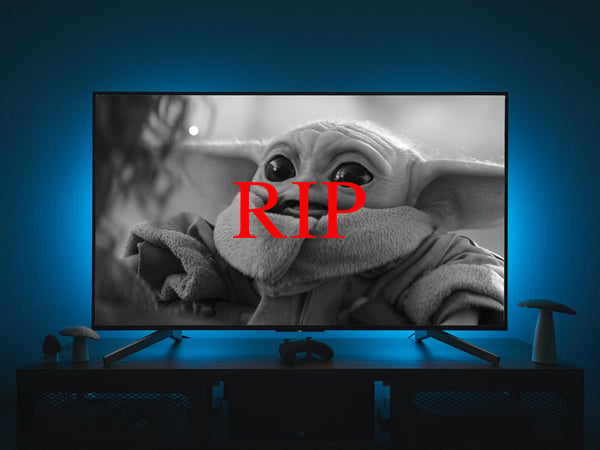
With The Mandalorian & Grogu on track to flop for Disney, did the House of Mouse steer their TIE Fighter too close to the sun?
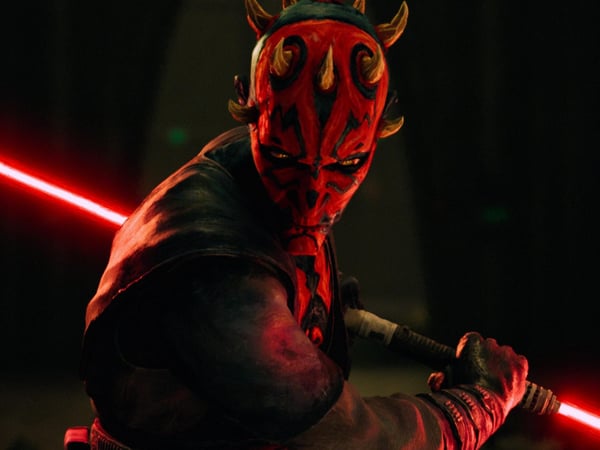
Somehow, Darth Maul returned. Earlier this month, Lucasfilm put a bow on the first season of Maul: Shadow Lord, a 10-episode Disney+ animated series centred around the titular Dathomirian Sith warrior following his mysterious disappearance at the end of the Clone Wars. The show – which marked the character’s fourth onscreen appearance in Star Wars media since his debut nearly 27 years ago – was mostly well received by critics and performed decently in the Nielsen ratings. But for casual fans of Star Wars whose only interaction with the franchise has been through the theatrical nine-film Skywalker saga, they might notice they’ve missed a few chapters.
Despite numerous podrace antics, midichlorian exposition dumps and obsessively detailed galactic trade negotiations, the most enduring aspect of 1999’s The Phantom Menace was arguably its horned, red-faced heavy who terrorised an adolescent Nabooian Queen and the two Jedi guardians sent to protect her. Portrayed by stuntman Ray Park, Maul would meet his initial demise in the film’s climax after being bisected by a young Obi-Wan Kenobi (Ewan McGregor) and shoved down the galaxy’s longest generator shaft. Yet, it would take only a little more than a decade for his resurrection to occur when George Lucas chose to bring the character back for the fourth season finale of his animated Clone Wars series. When showrunner Dave Filoni was informed of the decision, his initial reaction was one of confusion. “It’s over. He’s cut in half. How’s that work?” Lucas' alleged response was jestful. “I don’t know, you’ll figure it out.”
Although the filmmaker had originally pitched Maul to return as the lead villain of the sequel trilogy long before Disney’s $4 billion acquisition of the brand in 2012, his lackadaisical approach towards the Sith Lord’s eventual revival was eerily portentous of the many other comebacks that laid ahead in the franchise’s future. Over the past few years alone several significant characters from the films have made their first live-action appearances in over a decade by being slotted into direct-to-streaming series rather than theatrical feature films, with stars such as McGregor, Hayden Christensen and even Mark Hamill reprising their most iconic roles in a litany of different spinoff shows.
When Park himself made a cameo at the end of 2018’s Solo: A Star Wars Story – revealing the alive-and-well Maul was now the leader of an interstellar criminal syndicate known as Crimson Dawn – it sluggishly carried over a story thread that was first established in later seasons of The Clone Wars and forms much of the narrative basis of Shadow Lord. Though it’s easy to see this moment as one of the earliest indicators the franchise was morphing into the sort of multi-platform web of content that a majority of audiences simply couldn’t keep up with, the move was also prophetic of a worryingly increasing trend that has emerged as the studios continue to plunder their creative assets to keep their respective streaming services afloat. Just last year, a similar misjudgement befell another piece of formerly-invincible Disney IP, when it was reported that Marvel Studios chief Kevin Feige confessed that his company’s own deluge of interconnected material, which included several spinoff shows and holiday specials, had “overwhelmed and alienated viewers” while diminishing the quality and reputation of their output.
In a 2023 interview, Liam Neeson, who played Jedi Master Qui-Gon Jin in The Phantom Menace, chalked up his disillusionment with the ever-expanding number of Star Wars offshoots to their insistence on contorting themselves to the confines of television. “I’m a bit of a snob when it comes to TV,” the actor admitted. “I just like the big screen, you know?” Amusingly, Neeson had in fact returned for a two-line performance in the Obi-Wan Kenobi television series finale just a year prior to these remarks, but there is some truth to the actor’s comment that the average Star Wars title may no longer hold the sort of cultural cache that previously placed it amongst the more reliably prestigious blockbusters in Hollywood. What was once a franchise defined by its ability to create must-see cinematic events every few years – full of endless speculation and fan anticipation in the lead up to sold-out midnight premieres – has instead been transformed into a steady pipeline of weekly content drops that can be accessed in just a few quick presses of a button, creating a sense of non-urgency that turns a string of already fairly anonymous shows into ones that feel like homework (fancy an episode of Skeleton Crew anybody?).
With Lucasfilm’s theatrical slate only just starting to get back on track, the future of the big-screen Star Wars experience looks even grimmer. As the franchise’s first movie in nearly seven years, The Mandalorian and Grogu will become the only film in the series to be a continuation of an already existing television show. Though its freshman season was an undeniable hit – in part thanks to its clever retrofitting of Lucas’ original samurai and western influences into a weekly episodic format – later installments would see this structure abandoned for perfunctory tie-ins to the films and other pockets of the accepted canon, with characters like Boba Fett and Ashoka Tano snipping up screentime to launch their own backdoor pilot story arcs.
By the time its cinematic counterpart releases later this month, the series’ excessive focus on lore-building – compounded by the fact that some of its most interesting creative talent have already departed for brighter things – has resulted in a diminished final product with the drab visual aesthetics of a generic streaming show; more closely resembling a feature length episode of television rather than the cinematic awe typically synonymous with Star Wars.
All of this signals a shift towards the kind of dull and innocuous filmmaking sensibilities that have recently coursed their way through Hollywood, with studios like Disney increasingly favouring a roster of ‘safer’ in-house directors such as Jon Favreau, Ron Howard and next year’s Star Wars: Starfighter helmer Shawn Levy – who was entrusted with a key to the franchise after netting the Mouse a cool $1.3 billion with the Epic Bacon humour of Deadpool & Wolverine – over the unique visions of auteurs like Rian Johnson, Steven Soderbergh and Phil Lord & Christopher Miller, who all departed their individual Star Wars projects due to creative differences (the latter being particularly egregious in the wake of the runaway success of Project Hail Mary).
As this simplified redirection begins to take shape, another one of its unfortunate side effects is the placation of those responsible for racist backlash towards more intriguing projects like The Acolyte, a trend made especially frustrating after the tremendous critical acclaim of Andor (a prequel to spin-off film Rogue One) proved that the franchise didn’t have to sacrifice its narrative engagement to be reflective of current events. As dire as it may sound, a new Star Wars film will most likely always make enough money needed for the corporate suits in charge of greenlighting them to parade one around as a success. But with the exact nature of its future uncertain in the wake of leadership changes at Lucasfilm, audiences can only hope that the powers that be will choose to focus on new corners of the galaxy rather than retread already established ground.
A long time ago in a cinematic universe far, far away, the films of a certain British spy with a license to kill also suffered their own identity crisis after a run of progressively absurd adventures forced a complete reset of the brand’s tone and iconography for modern audiences (though it will no doubt be interesting to see how the character continues to evolve after being sold off for parts to Amazon). Whether or not a similar recalibration needs to take place with Star Wars is up for debate, but if the franchise remains hesitant to break away from some of its most entrenched legacy storylines, it might as well be better off sliced into pieces and launched into the endless depths of space. Chances are, someone would resurrect it in a few years anyway.


0 Comments