
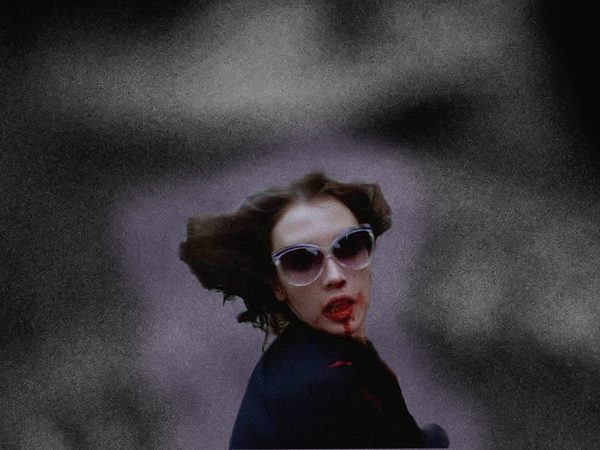
Andrzej Żuławski's grotesque vision of a marriage collapsing is an unnerving reflection of our increasingly disconnected world. If handled with care, could a remake remind us of what we stand to lose?
Over the past few years, Andrzej Żuławski’s Possession has been put on the internet’s radar as a morbid curiosity. You can find the film on endless ‘most disturbing movies ever made’ iceberg lists that the algorithm favours; the gruesome, uncanny moments being perfect visuals for clickable thumbnails. And then there is Anna (Isabelle Adjani) thrashing around in oversized Yves Saint Laurent sunglasses, becoming the ‘weird girl’ Halloween costume of recent years. Screenshots of her mid-scream and covered in blood have become an essential Instagram grid post for the girl who’s going through it. But beyond fear and social media, it’s the film’s dedication to raw emotion that makes it stand out in our apathetic time.
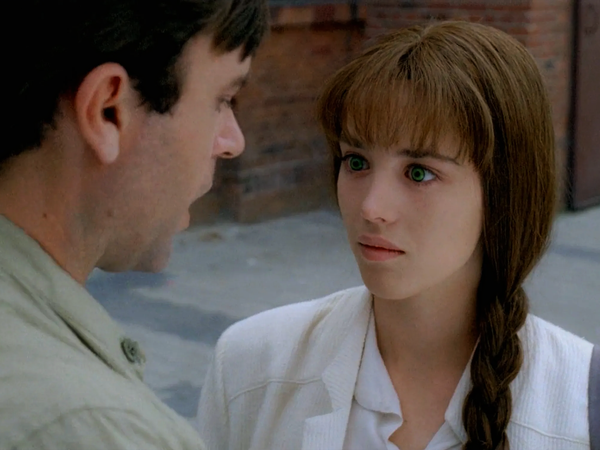
Adjani’s unique performance, inspired by Jerzy Grotowski, the influential Polish theatre director whose approach to performance tested the limits of physical endurance and “exploited the intimacy of live theatre to confront the audience directly,” can feel alien in a time when we are so used to seeing perfection, even when it is meant to be ugly. The source of her palpable rage is open to interpretation: the loss of identity after motherhood, falling out of love, the visceral pain of divorce. While these themes are evergreen, it is Possession’s collapse of communication which makes it stand out more than ever 45 years later. Anna and Mark (Sam Neill), a young married couple with a son living in West Berlin, reach otherworldly neurotic heights as they go in circles, figuratively and literally: arguments that sound like unsolvable riddles, chasing one another around identical bare streets, and doppelgangers that take the narrative even further from reality.
Whilst we watch Anna and Mark’s relationship crumble, we repeatedly see the Berlin Wall looming around them. The film opens with the graffiti, “DIE MAUER MUß WEG” (“The Wall Must Go”), and ends with real guards on the Wall peering into the camera through binoculars. Watching Possession today, it’s hard not to see the film as a mirror. Like Anna and Mark, we must go about our lives being watched in a pressurised, paranoid, and confused reality, where online censorship is disguised as a safety act, and AI is causing people to be wrongly jailed. Indeed, as Adam Curtis puts it, "we live in a time of great uncertainty and confusion. Events keep happening that seem inexplicable and out of control." This external chaos seeps into the home, often without us even realising, as we’re left wondering why a loved one in front of us is now a stranger, and how a life that should have been simple came to resemble a haunted house at a theme park.
A few hours of doomscrolling can make you want to throw yourself around an empty subway, screaming and throwing up. With the average day in 2026 including smiling for the Flock cameras and giving websites your passport details that will be leaked onto 4chan in a few months, watching Possession is relatable and cathartic. We can live vicariously through Anna’s thrashing and screaming, her performance a convincing choreography of suffocation. Possession is a rare piece of media that successfully conveys the surreal, absurd terror that has crept into everyday life over the past 20 years. Films like The Social Network and Ingrid Goes West no longer cut it when there’s an AI boyfriend epidemic; instead, the stories we crave ought to be as unbelievable as the one we are living in. Being plugged in to a constant stream of disturbing, hyperreal content has unsurprisingly desensitised us. Anna and Mark’s doppelgangers, cold and complacent, are eerie parallels to our own online personas – curated versions of ourselves that must follow terms and conditions in order to exist convincingly, divorced from real human experience in their deliberate and fine-tuned makeup.
Żuławski raised the bar for horror, and his influence is felt in today’s features: when watching Nell Tiger Free thrashing around in The First Omen (2024) or Lily Rose Depp teary-eyed and manic in Nosferatu (2024), the blueprint is clear. Alongside directing legendary moments, his dedication to creating his work despite constant setbacks imposed by authoritarian governments was just as inspiring. His 1972 film The Devil was banned, and Polish authorities defunded his unfinished sci-fi On the Silver Globe during production in 1977-1978, but this did not hinder his radical filmmaking ethic, which remained confessional in the face of repression.
Considering these unique and intimidating feats in filmmaking, you might imagine a Possession remake would be low on Hollywood's to-do list, but, of course, the fact that they’re making it anyway comes as no surprise. Starring Margaret Qualley as Anna and Callum Turner as Mark, the film is currently in production, directed by Smile creator Parker Finn. In July, we saw images of Qualley running down a street in New Jersey on set, and while Qualley looks more like Adjani than she does her own mother, an uncanny resemblance is not enough reason to potentially botch a classic.
That being said, a remake, unfortunately, makes sense. Every other week, a reboot or a 20-years-too-late sequel is announced that relies purely on manufactured nostalgia to bring in viewers, neglecting worthwhile storytelling in the process. We’re in need of a piece of well-made, accessible media that can cut through slop and show how catastrophe can happen when we’re unable to communicate and live under constant surveillance. They don’t have to give Anna an iPhone or have Mark work for Palantir; the original setup could be enough to convey these messages if the creators tap into Żuławski’s filmmaking approach, not retreating into Hollywood glossy and embracing the core elements that made Possession a classic in the first place.
A good film can shift social consciousness and spark conversation, and considering we are living in an internet discourse economy, a remake of this classic could bring to light how we have all felt like Anna, at one time or another. A Possession remake, if done right, could scare us back into reality. In Żuławski's own words: “This film comes from a very simple vision: we are all unhappy, and we don’t deserve it.”


0 Comments