
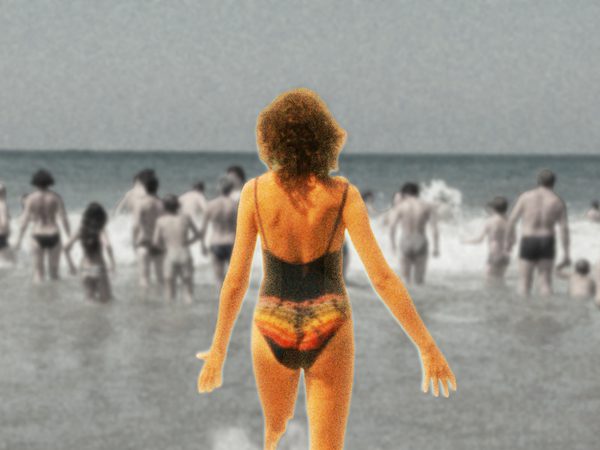
Transforming the idyll of summer into a landscape of alienation, Éric Rohmer's piercing portrait of loneliness endures as a deeply feminine exploration of solo travel.
“It will be 'green,' but a most wonderful green, a green which no artist could ever obtain on his palette, a green which neither the varied tints of vegetation nor the shades of the most limpid sea could ever produce the like! If there be green in paradise, it cannot but be of this shade, which most surely is the true green of hope!” In his 1882 novel ‘The Green Ray‘, Jules Verne transformed an obscure sailors’ superstition into a cultural myth.
Verne quotes an old Scottish legend that says anyone who sees such a green flash at sea just once will be incapable of being deceived in matters of the heart. The fleeting phenomenon, visible for only a moment as the sun dips below the horizon, has become a steadfast symbol of love and hope for those away from home. The search to bear witness to such a spectacle has since inspired countless works of film, art and folklore, from Italian composer Mario Castelnuovo-Tedesco’s 1916 solo piano work Il Raggio Verde, to Joan Aiken's 1969 novel The Windscreen Weeper and the 2007 Disney classic Pirates of the Caribbean. None are as culturally-withstanding however, as French New Wave giant Éric Rohmer’s film of the same name.
The film tells the story of a young woman named Delphine (Marie Rivière), who despite her friends and career in Paris, feels desperately lonely. After the breakdown of a relationship and loss of a guaranteed travel partner, Delphine wishes for a summer vacation, but recoils at the prospect of travelling single and alone. When her friends suggest she go by herself, she dismisses the idea as “inhumane,” unable to imagine finding companionship or joy on her own. Despite their encouragement, her fear of solitude outweighs the promise of independence. “I’m not the adventurous type,” she duly informs a friend. After an attempt to tag along with a family friend’s holiday plans fall through, the film follows Delphine as she roams France, visiting Cherbourg, the Alps, Biarritz, and Saint-Jean-de-Luz in an aimless summer daze. Her travels are an exploration of one of life’s enduring questions: how much are our romantic experiences shaped by choice, and how much is left to chance?
In many ways, The Green Ray is quintessential Rohmer, with scenes of beautifully tanned twenty-somethings in chic swimwear, idyllic beaches and seaside resorts. Such focus delivers memorable shots of naturally sun-soaked close ups of people enjoying the supposed best time of year, as seen across his other notable works including La Collectionneuse (1967), Pauline at the Beach (1983) and A Summer's Tale (1996). Preferring non-professional actors, Rohmer would edit sparingly, often filming scenes in chronological order at the exact time of day they were set. His attention to the seasons was meticulous, as noted in John Wakeman’s 1988 critical film dictionary on post-war directors: "my films are based on meteorology. If I didn't call the weather service everyday, I couldn't make my films because they're shot according to the weather outside. My films are slaves to weather."

Yet, among Rohmer's gallery of female protagonists, Delphine is an outlier. Rohmer first conceived The Green Ray after seeing the following classified ad: “I am beautiful. I am from Biarritz. I should please, and men pay no attention to me, why?”. In a single sentence, the notice captures Delphine's central predicament: a woman who outwardly possesses everything society tells her should guarantee happiness, yet finds herself persistently disconnected from those around her. In this sense, she is the inverse of La Collectionneuse’s Haydée (Haydée Politoff) who drifts effortlessly through the rituals of a Riviera summer, attracting admirers and embracing the endless possibilities of holiday romance. Judged by the men around her as a "collector" of lovers, she nevertheless appears entirely at ease inhabiting the role of the carefree, desirable female tourist.
Delphine refuses to perform this role. While the women she meets chat easily with strangers and slip into the flirtatious rhythms of holiday life, she recoils from casual encounters, abandoning conversations the moment they hint at romantic expectation. She is incapable of presenting the spontaneous version of herself that summer seems to demand. Unlike Haydée, who is reeled in by the romantic manipulations of art dealer Adrien (Patrick Bauchau), Delphine is above all else committed to her own morality. In one particular exchange, she explains her dedication to vegetarianism, stating “lettuce is a friend” when challenged, revealing her unwavering faith in her own intuition – however isolating, awkward or emotionally painful that conviction may prove to be.
Later on in her journey, Delphine becomes obsessed with the idea of seeing the rare ‘green ray’ phenomenon, which comes to represent her quest for fulfilment. The obsession begins almost by chance when she overhears a group of strangers discussing Verne's novel. Lingering just out of sight, she listens as they explain that the novel is compelling because “there are characters who are searching for something.” In that moment, Delphine’s aimless wandering is reframed not as indecision but as a legitimate act of yearning. The group goes on to explain that the green ray only appears under perfect atmospheric conditions and that, if witnessed, “you can read your own feelings. And those of others.” The scene quietly reveals what Rohmer’s film has been pursuing all along: Delphine is not looking for a holiday or even a romantic opportunity, even with one fittingly presenting itself as she finally sees the green flash for herself, but meaning and purpose.

Contemporary cinema has repeatedly returned to the notion of a summer of transformation, from Elio's (Timothée Chalamet) first love unfolding through long afternoons of cycling and swimming in Call Me By Your Name (2017) to Calum's (Paul Mescal) quietly unraveling fatherhood in the sun-bleached resorts of Aftersun (2022) and Arthur's (Josh O'Connor) dreamlike drift through the Tuscan countryside in La Chimera (2023). In these films, summer is a space for introspection, allowing their male protagonists to wander, reflect and exist on the margins without questioning from those around them. Female travel narratives, by contrast, are more often built around reinvention. In Eat Pray Love (2010), Elizabeth Gilbert's (Julia Roberts) grief is healed through pasta in Rome, meditation in India and romance in Bali; Under the Tuscan Sun (2003) turns divorce into the restoration of a crumbling villa and an idyllic new life; even films like Wild (2014) frame solitary journeys as transformative quests in which hardship inevitably delivers self-actualisation. The message is identical: leave home, find yourself.
Conversely, Delphine's loneliness is most acute when surrounded by people – strained dinners with strangers, unwanted advances on the beach, aimless walks through seaside towns only emphasise her awareness of being the only person without somewhere, or someone, to belong to. Rohmer recognises that a woman travelling alone is rarely afforded anonymity, her solitude is constantly observed, questioned, and treated as a problem to be solved. As the penultimate film in Rohmer's Comedies and Proverbs series, The Green Ray distils his enduring fascination with humanity’s search for truth in an uncertain world. Forty years on, its legacy speaks for itself: winner of the Golden Lion at Venice and seen by more than 460,000 cinemagoers in France, it became, in the words of biographers Antoine de Baecque and Noël Herpe, “certainly one of the most profitable films in the history of French cinema.”
Like Verne's elusive green flash, Delphine's revelation is quick but its impact long-lasting. By summer's end, she has learnt she is capable of existing within her own solitude. It is this acceptance that makes The Green Ray an enduring portrait of loneliness amid life’s ever changing seasons. In an era shaped by social media, solo travel culture and increasing conversations around loneliness, Delphine's experience remains deeply recognisable.


0 Comments