
In collaboration with the Queer East Film Festival, this year’s Emerging Critics cohort offer their responses to the film programme.
This is the third of three pieces published in collaboration with Queer East Film Festival, whose Emerging Critics project brought together six writers for a programme of mentorship throughout the festival.
Màtin Cheng
First impressions are often what we remember most clearly. My first impression of Darla, my partner in crime for this Queer East dispatch, came before we even met in person at our workshop. I had read Darla’s work beforehand, and I was struck by how effortlessly Darla moved between political observation, film analysis, and academic framing. Our later conversations only deepened that impression. My first impression of this year’s Queer East programme arrived just as vividly: a shot from Park Joon-ho‘s feature debut 3670 (2025), in which people dance freely behind what appears to be the bars of a cage. The image lingers with a symbolic paradox: free in body, imprisoned in spirit.
That contradiction resonated throughout this year’s programme. Across these films, queerness is not simply represented as liberation from visible restriction. Instead, queer life appears as something shaped by memory, migration, family, shame, history, and the invisible walls people carry within themselves. The cage is not only a place that holds queer people in. It is also a structure of feeling, a space of survival, and sometimes a memory that cannot easily be left behind.
The coming-of-age 3670 centres the protagonist Cheol-jun (Cho Yoo-hyun), a young North Korean defector who attempts to build a new life in South Korea. From that first image of our protagonist dancing behind bars, it is easy to expect a story about escape. Cheol-jun might seem like someone moving from one cage into a freer world. But Park Joon-ho’s film is more interested in the nuance within displacement: the cage around him never takes one fixed form. It is the invisible division between South and North Koreans. It is the rituals and power dynamics inside the gay community. It is his traumatic past in North Korea, his fear of coming out to his defector friends, and his simultaneous insecurity and pride.
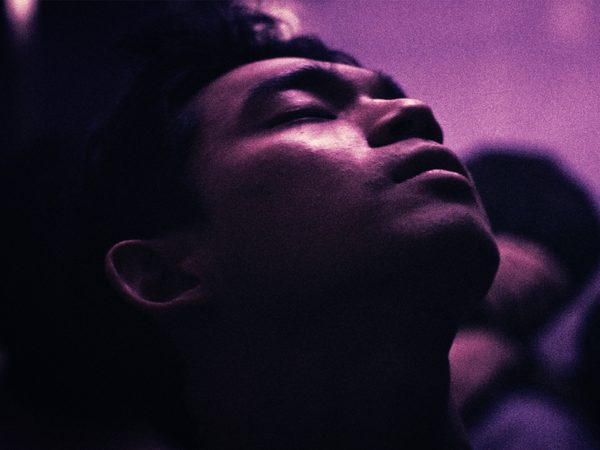
It would also be tempting to read Cheol-jun’s story purely through the gaze of others: the way he is looked at as a North Korean gay defector, whether through the curiosity and distancing view of South Korean gay men towards defectors, or through the possible homophobic view of his North Korean defector friends, who come from a more conservative society. But what Park does so well is resist that simplified reading too. He keeps the camera on Cheol-jun, and what he finds is a character who has confined himself within a guarded circumference. It is Cheol-jun himself who assumes his defector friends would not accept him as gay, and so he shuts himself away before they even have the chance. Even when he is desired, even when his body draws others’ attention, Cheol-jun still cannot open himself up to his potential love interest Yeong-jun (Kim Hyun-mok). He cannot tell Yeong-jun how he really feels, and that silence eventually pushes Yeong-jun away before he decides to leave for Canada for good.
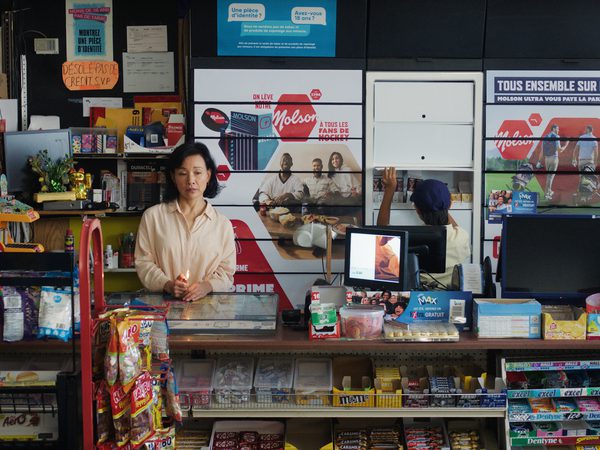
That first impression of Canada as a freer place then carries this dispatch across the Pacific. In 3670, Yeong-jun assumes that Canada would be freer and friendlier to queer people. In Xiaodan He’s Montreal, My Beautiful (2025), that migratory fantasy becomes more complicated. The film follows Feng Xia (Joan Chen), a first-generation Chinese immigrant in Montreal, as she begins to navigate her sexuality and desire after meeting Camille, a spirited young Québécoise.
At first, the film seems to be moving towards a familiar story of forbidden love and family restriction. Feng Xia and her husband belong to a wave of economic immigrants who moved to Canada in the 2010s. They run a grocery shop, they do not speak French in the family, and live within an archaic family structure where Feng Xia takes on all the unpaid domestic labour. From this first impression, the film could easily become a story about a woman liberating herself from a suffocating family to find freedom.
Through Joan Chen’s performance, Xia is never presented as someone without the will to break free. But the film does not make her cage only about her husband or her children. Instead, her husband's masculinity is challenged both professionally and domestically. His dream of returning to the kind of award-winning engineering job he had before coming to Canada has been shattered, weakening his sense of status and authority. At home, his daughter, who is now a first-year college student, also challenges the patriarchal structure of this traditional family and attempts to stand up for her mother. But when Xia attempts to step outside the boundaries of her family life – attending French classes, trying out dating sites, beginning a romantic relationship unlike any she has had before – the cage of the past turns out to be something she has long carried within herself. She could bear the loveless intimacy with her husband, wearing a wig to please him, then slip away to a local massage parlour to please herself. Yet the moment she becomes intimate with another woman, she calls it dirty, as if decades of moral discipline had never left her body. And when her girlfriend and the local lesbian community offer an intimacy she finds hard to receive, Montreal too begins to feel less friendly than she had imagined. In its tender but firm way, the film suggests that what stops Xia is not the usual tropes of family duty or external restriction, but what she has made her own: the shame of desire, of being desired, and of a body that has awakened before her mind is ready to follow.
The boldest and most playful version of this idea comes in Ratchapoom Boonbunchachoke’s A Useful Ghost (2025). The film moves through a dual narrative. In one, a self described academic ladyboy, overwhelmed by the dust stirred up by his city’s renewal projects, buys a hoover to clean his apartment, only to hear it coughing at night, haunted by the handsome ghost Krong. In the other, Nat, the dead wife of March, returns by possessing a hoover after she and their unborn child die of respiratory disease. March is the younger son of Suman, the owner of an electronics factory, whose conservative in-laws never accepted Nat as a daughter in law. To prove herself as a ghost and stay with March, Nat becomes useful not only to Suman’s family, but also to the powerful figures disturbed by ghosts from the people killed during the 2010 Thai military crackdown. She becomes the titular useful ghost.
Yet the more useful Nat becomes to those in power, the more she seems to lose herself. She is a queer soul caught between life and death, human and machine, but usefulness turns her into something much more frightening: a ghost who helps the living erase other ghosts. In this world where ghosts survive only when being remembered by someone, the ghosts of political violence victims come back with anger, refusing to let the truth be buried. When Nat wipes away those memories, she is not just helping authority tidy up its haunted house. She is helping it decide which version of memories are allowed to remain.
That betrayal cuts back into her own existence as a ghost. March, whose memory keeps Nat as a ghost, would rather remember the victims of state violence than the ghost she has become. This is where A Useful Ghost becomes more than a brilliant comic conceit. Its absurdity opens onto something bitter: queerness can also be made useful, cleaned up, acquired into power, and turned against other marginalised lives. Around Nat’s haunted hoover, the film gathers inequality, historical trauma, dust pollution, religion, and workplace dispute, until queer resistance no longer looks like a separate struggle, but part of a much larger, dirtier world.
Across these three films, my first impression of Queer East begins with a physical image: people dancing freely behind bars. By the end of the programme, that image no longer remains just an image. It becomes a way of seeing how queer freedom is fought for across different lives and histories, how self-doubt is as much an inhibitor to freedom, and how one needs to challenge oneself to refuse the cage. In 3670, Montreal, My Beautiful, and A Useful Ghost, queer life is not simply about escaping the cage. It is about finding, in the end, the voice to say: this is what I am.
Darla Timwell
Queer East by name alone may seem to suggest a narrowly defined corner within today’s densely populated film festival landscape, but the festival distinguishes itself through an adventurous curatorial emphasis on the experimental and the politically engaged. In exploring a vast breadth of form across various geographies, Queer East, now in its 7th year, resists framing queer Asian cinema as a niche category within a single framework. This strength of the festival lies within its open curatorial vision, inviting a litany of curators to piece together distinct programmes. The connective thread that emerges from the programmes covered here, though wildly disparate in form, is a scrutinising of the authorities which shape cultural narratives and a questioning of the hierarchies that mediate myth, memory, and bodies.
The 2011 South Korean documentary, The Girl Princes, directed by Kim Hye-jung, was screened at Centre 151 in Hackney, an independent charity and home to a low-cost acupuncture clinic, among other things. The film itself is a low-budget doc exploring female Gukgeuk, a form of musical theatre immensely popular in the 1950s, in which an all-female cast plays both gender roles. The doc takes a talking-head format to interview the veteran practitioners (now well into their 70s), who recall with bravado, their working-class backgrounds, the radical choice to uproot their lives against the conservative milieu of 1950s South Korea, and the hoards of fangirls who would fawn over the them.
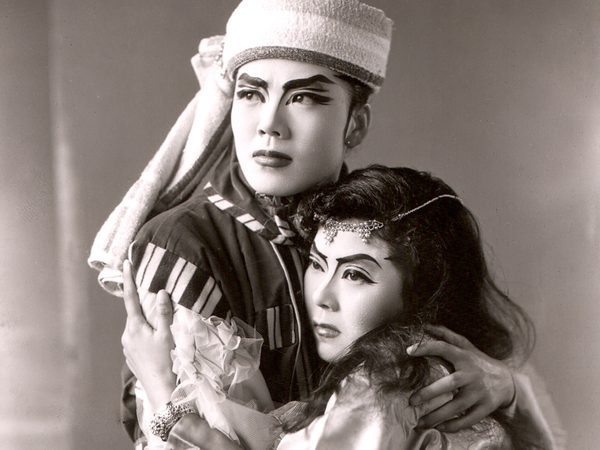
In fact, female Gukgeuk was so popular it eclipsed the demand of mixed gender troupes, causing many to disband. In the ensuing 1960s, Korea’s culture industry underwent a formalisation process with new policy molded by official government bodies. The former male theatre directors of disbanded groups who had once been threatened by female Gukgeuk were now at the helm of shaping policy. Described in school textbooks as a stain on the country’s theatre tradition, official narratives of the theatre’s collapse are challenged in the documentary, which reveals it to be the result of a political project engineered by the state.
Accompanying the film was a lap-dance drag performance by festival programmer Emily Jisoo Bowles and a pop-up bar offering Asian candy, including homemade Korean mochi served by a maid cosplayer. This casual setting reflects Queer East’s community-oriented approach and an apt context to explore the political questions of who cultural institutions lend recognition to, while encouraging dialogue. In one conversation, we pondered the deliberately vague language used by one of the interviewees who described some of the actors who left Korea to live with their “best-friends”. Is she oblivious to the queer relationships around her? Or, is it more likely a euphemism in the service of queer self-censorship? The film is never explicit, but the undercurrents aren’t hard to pick up on.
Echoing this refusal of fixed meaning, Where Comes Mulan (2026) had its UK premiere at the ICA, after its premiere at IFFR, and it similarly undoes the official narratives of Mulan, the mythic Chinese heroine who disguised herself as a man to join the army in the place of her father. Director Tianyi Zheng returns to her hometown in Huangpi, Wuhan which also happens to be the alleged birthplace of the eponymous folk-turned-pop culture icon, and Zhang teases out the competing narratives of the East against the West, and how the blanket capitalism of the tourist industry capitalises on the mythical figure. The first half of the film depicts the Mulan-themed attractions which have emerged in the area: tacky theme park rides, dinosaur statues, and Thai water festival activities that bear little in relation to Mulan, as the locals wryly observe. Half-submerged and abandoned would-be swanky hotels also feature heavily and reflect China’s recent topography of failed infrastructure projects. Their decaying presence quite literally reflects the hollow capitalist logic of attempting to transform myth into profit within a highly commercialised orientalist heritage industry. The film asks what is lost when the local legend becomes a global icon, when cultural and moral values such as honour, filial obligation, domestic order, are displaced by smooth spectacle.
The film takes a turn when tufty-haired androgynous performance artist Qiaochu Guo enters, reciting bureaucratic notices posted in the abandoned hotels in the style of classical Chinese opera, heightening the absurd disjunction between corporate development and cultural tradition. The film shifts focus to the gender-queer elements of Mulan, as Qiaochu takes part in a family photoshoot, donning a bobbed wig, and traditional feminine attire, highlighting the Chinese understanding of Mulan as a parable of filial piety rather than through the lens of Disneyified girlboss feminism. The film culminates in a dance by Qiaochu, whose fluid movement reinacts Mulan’s suicide (as one version of the myth goes), and such a subjective interpretation stands in stark contrast to the massive, unmoving and beaming white statue of Mulan looming behind her – a perfect visual metaphor encapsulating the central tension of the film. When questioned on the ethics of speculating on historical figures, the director stated that she sees the film as a work of fanart, appropriating Mulan from a queer perspective. Afterall, if the Chinese military can use her to advertise enlistment, why shouldn’t she be able to draw out these glaringly queer elements of the legend?
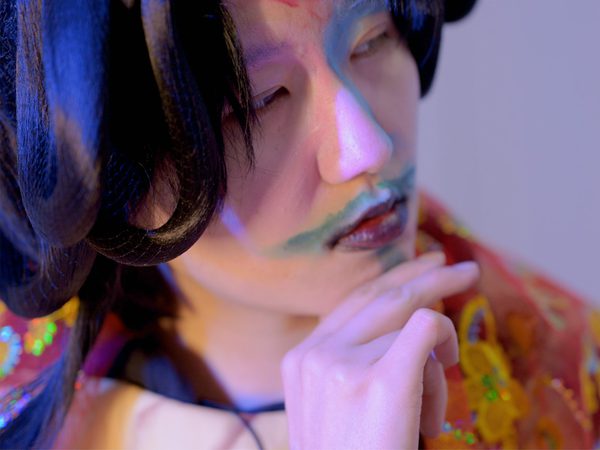
A similarly speculative shorts programme entitled Myths We Call Bodies, curated by MC2, that aims “to trace the impact of AI and emerging technologies on storytelling and cultural expression” sparked my interest, as the films’ simultaneously rely on and question the use of AI. Broadly, these films use AI and CGI avatars to question technology’s mediation in the representation, experience and understanding of queer bodies and gender roles, though I felt that some were more successful than others in their vision. The more successful ones provoked questions concerning how far AI can subvert gender presentation, when it is a technology predicated on an archive of preexisting social hierarchies. The filmmakers responded in markedly different ways, with varying degrees of playfulness and reliance on slop-aesthetics. And while artists elsewhere have called for boycotts, the programme questions what that might mean, revealing this impulse to be increasingly difficult as the technology becomes more integrated within everyday tools we use. Does platforming this kind of work risk normalising AI and present resistance as futile? Or create a productive conversation on the contradictions of the artists who do choose to use AI in moving-image art to question its role in society?
Uneasy questions, promiscuous boundaries; the festival thrives on lingering within the in-between spaces of fixed categories. Rather than resolving tensions, Queer East creates a permeable space for dialogue and identity to evolve.


0 Comments