
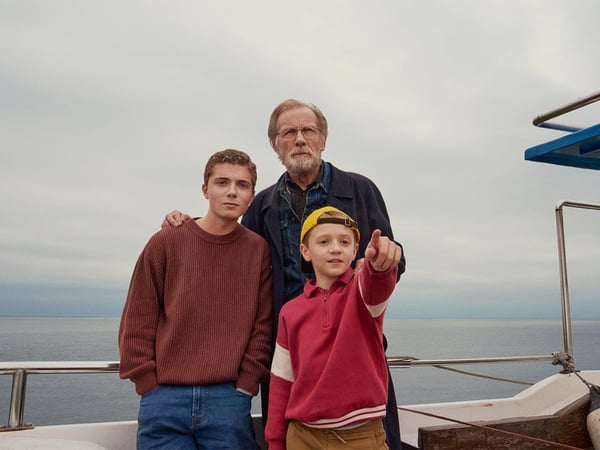
An improvised road trip from Sheffield to the west coast of Ireland forms the backbone of this maudlin family drama starring the always-likeable Bill Nighy.
If your cinematic disposition only allows your body to process base levels of background sentimentality, then you may want to give Morgan Matthews’ adaptation of Mark Lowery’s 2018 YA novel ‘Charlie and Me’ a wide berth. Here we have as-yet-untapped conduits for screen sentimentality found in pretty much every formal and narrative decision as two young brothers flee from their bickering parents in Sheffield and head on a public transport odyssey to their jolly grandfather’s idyllic trailer park in Dingle on the west coast of Ireland.
Charlie (Dexter Sol Ansell) we learn was born prematurely and grows up suffering from chronic asthma. Yet his respiratory ailments haven’t prevented him from blossoming into a cheeky so-and-so/lovable scamp with a lengthy repartee in fart-themed quips. His older brother Finn (Roman Griffin Davis) is more introspective, a budding artist who takes his fragile (and often irritating and reckless) sibling under his wing. When Finn overhears that his parents (Clare Dunne and Michael Socha) are potentially in the midst of a split, he decides to sweep up Charlie, jump out the window and travel the perfectly-rounded 500 miles to visit grandpa John (Bill Nighy), who himself is on the familial naughty step.
Flashbacks are parcelled out and dropped into the standard-issue road trip saga, with Finn attempting to smuggle Charlie along with him lest an authority figure dob them in. Each bit of context is laden with little red flags, and by about half-way in it’s clear that something very bad happened that is making everyone upset. We eventually learn the nature of everyone’s melancholy, why the spirited John is a shadow of his former self and why the kids’ parents are at loggerheads, and it all comes together in a hash of maudlin self-healing and acceptance. In its final act, the film also suddenly transforms into a bizarre homage to Free Willy (1993).
All the performances are calibrated for maximum tear-jerk effectiveness, and the scenes of blissful happiness are ramped up to make the come-down hit harder. Matthews’ direction is functional, and every shot, give or take, is smothered in emotive Irish tin-whistle music. Maisie Williams is perhaps MVP as the nomadic busker who the lads meet en route who is trying to escape from her own less-than-ideal family situation, but she does so with a bit more eye-rolling emotional distance. It’s a well-meaning film about trauma and grief, but its sledgehammer approach quashes any subtlety and originality, leaving you with a work that feels calculated in its teeth-itching niceness.


0 Comments